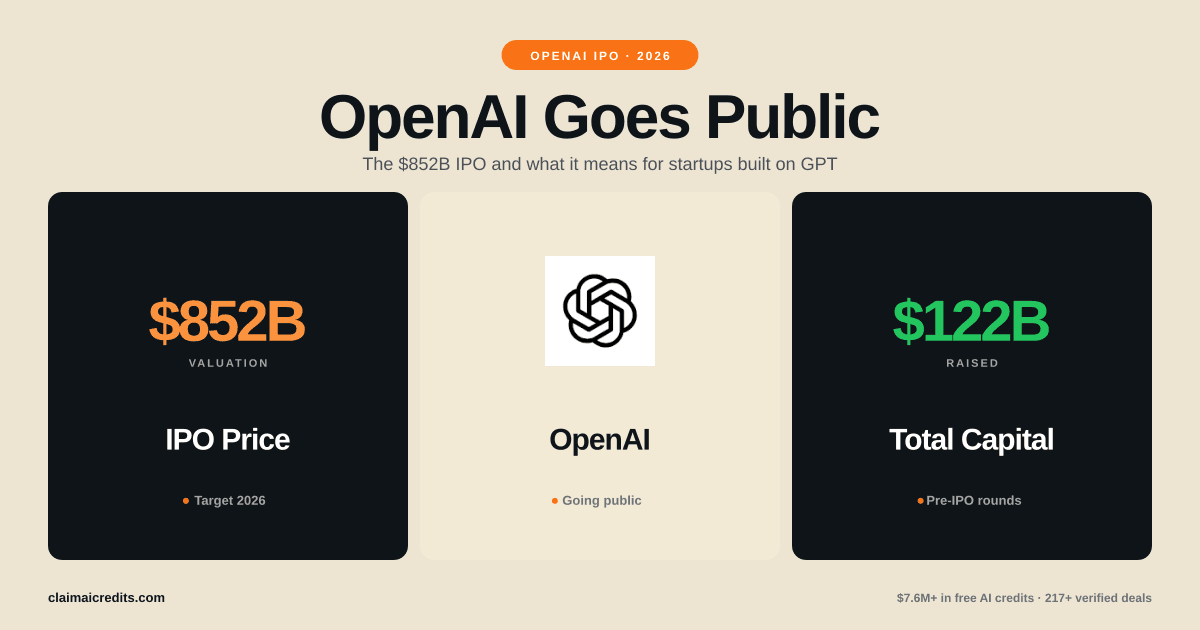
IPO OpenAI в 2026 году: что означает оценка в $852 млрд для стартапов, использующих их API
OpenAI привлекла $122 млрд при оценке в $852 млрд. Вот что график IPO означает для цен API, кредитов для стартапов и почему вам стоит зафиксировать бесплатные кредиты прямо сейчас.
Только что состоялось крупнейшее частное привлечение средств в истории
OpenAI закрыла раунд финансирования на $122 миллиарда в апреле 2025 года, оценив компанию в $852 миллиарда. Чтобы поместить это число в контекст: это больше, чем ВВП Швейцарии. Это делает OpenAI самой дорогой частной компанией в истории с отрывом почти в три раза.
Раунд возглавил SoftBank при участии Microsoft, Thrive Capital, Coatue и нескольких суверенных фондов благосостояния. Финансовый директор Сара Фрайар публично обозначила опасения по поводу сроков IPO в 2026 году, но рыночный консенсус таков, что OpenAI станет публичной в течение следующих 12-18 месяцев.
Если вы строите на API OpenAI, это всё меняет. Компании после IPO сталкиваются с неумолимым давлением по росту выручки. Это давление напрямую перетекает в цены API, ограничения бесплатных тарифов и щедрость программ кредитов.
Окно для фиксации бесплатных кредитов закрывается.
Умный ход прямо сейчас: Зафиксируйте бесплатные ИИ-кредиты по OpenAI, Anthropic, Google Cloud и AWS до того, как IPO OpenAI вызовет общеотраслевые изменения цен. Сегодня вы можете накопить от $50,000 до $250,000+ кредитов по нескольким программам. После IPO эти программы почти наверняка станут менее щедрыми.
Внутри оценки в $852 млрд: что на самом деле означают цифры
Оценка в $852 миллиарда — это не просто большое число. Она представляет набор ожиданий, которые напрямую повлияют на каждый стартап, использующий API OpenAI.
Разрыв между выручкой и оценкой
По сообщениям, OpenAI генерировала около $3.4 миллиарда годовой выручки к концу 2024 года, быстро растущей, но всё ещё сжигающей деньги с чрезвычайной скоростью. При оценке в $852 миллиарда это означает мультипликатор цена-к-выручке выше 200x.
Для сравнения:
| Компания | Оценка / Рыночная капитализация | Выручка (годовая) | Мультипликатор Ц/В |
|---|---|---|---|
| OpenAI (частная) | $852B | ~$5B (оценка 2025) | ~170x |
| Google (Alphabet) | ~$2.1T | ~$350B | ~6x |
| Microsoft | ~$3.1T | ~$245B | ~13x |
| Anthropic (частная) | ~$61B | ~$1.2B (оценка) | ~50x |
| Meta | ~$1.5T | ~$160B | ~9x |
Мультипликатор OpenAI в 10-25 раз выше, чем у устоявшихся технологических гигантов. Чтобы оправдать эту оценку как публичная компания, OpenAI нужно драматически наращивать выручку — и цены API являются одним из самых прямых рычагов.
Обязательство по инфраструктуре на $600 миллиардов
OpenAI взяла обязательство примерно на $600 миллиардов расходов на ИИ-инфраструктуру через инициативы вроде проекта Stargate (совместного предприятия на $500B с SoftBank, Oracle и другими). Эти расходы покрывают:
- Масштабное строительство дата-центров по всей территории США
- Разработку и закупку специализированных ИИ-чипов
- Инфраструктуру обучения моделей следующего поколения
- Мощности инференса для обслуживания растущего спроса на API
Кто-то должен платить за эту инфраструктуру. Сейчас счёт оплачивают инвесторы. После IPO эта стоимость перекладывается на клиентов — то есть на пользователей API.
О чём сигнализируют опасения финансового директора Сары Фрайар
Когда финансовый директор публично обозначает опасения по поводу сроков IPO, это обычно означает одно из двух: компания ещё недостаточно прибыльна, чтобы удовлетворить инвесторов публичного рынка, либо рыночные условия неблагоприятны. В любом случае сигнал ясен — OpenAI нужно найти путь к прибыльности перед выходом на биржу.
Самый быстрый путь к прибыльности для API-компании? Поднять цены, сократить бесплатные тарифы и конвертировать бесплатных пользователей в платные планы.
График IPO: что мы знаем
Вот текущее наилучшее понимание пути OpenAI к публичным рынкам:
| Веха | Сроки | Статус |
|---|---|---|
| Раунд финансирования $122B | Апрель 2025 | Завершён |
| Преобразование в коммерческую структуру | 2025 | В процессе |
| Цели по пути к прибыльности | Конец 2025 – 2026 | Неясно |
| Подача заявки на IPO (S-1) | Конец 2026 (раньше всего) | Не подана |
| Публичное размещение | Конец 2026 – начало 2027 | Оценочно |
Фактор преобразования в коммерческую структуру
OpenAI изначально была некоммерческой организацией. Её продолжающееся преобразование в коммерческую структуру является предпосылкой для любого IPO. Эта реструктуризация столкнулась с юридическим вниманием от множества сторон, включая юридическую команду Илона Маска. График преобразования напрямую влияет на график IPO.
Рыночные условия
Технологические IPO были вялыми с 2022 года. Хотя бум ИИ создал интенсивный интерес инвесторов, высокие процентные ставки и волатильность рынка могут сдвинуть IPO OpenAI на 2027 год. Компания может предпочесть оставаться частной дольше, если рыночные условия неблагоприятны, но привлечение $122 миллиарда создаёт давление со стороны инвесторов, которые хотят ликвидности.
 ClaimAICredits
Зафиксируйте бесплатные ИИ-кредиты до изменения цен
IPO OpenAI может изменить цены API во всей отрасли. Заявите свои кредиты сейчас — мы отслеживаем 217+ проверенных программ кредитов по каждому крупному ИИ-провайдеру.
Смотреть все программы кредитов
Как IPO повлияет на цены API
Это раздел, который важнее всего для стартапов. Вот что исторически происходит, когда API-компании выходят на биржу, и что это означает конкретно для OpenAI.
Исторический прецедент: что произошло, когда другие API-компании вышли на биржу
Каждая крупная API-компания, вышедшая на биржу, в итоге поднимала цены или реструктурировала бесплатные тарифы:
| Компания | Бесплатный тариф до IPO | Изменения после IPO |
|---|---|---|
| Twilio (2016) | Щедрые бесплатные кредиты | Постепенное повышение цен, сокращение бесплатного тарифа |
| Snowflake (2020) | $400 бесплатная пробная версия | Сокращение пробных кредитов, рост цен за потребление |
| MongoDB (2017) | Бесплатный тариф Atlas | Более агрессивное ограничение бесплатного тарифа |
| Cloudflare (2019) | Щедрый бесплатный план | Бесплатный план сохранён, но рост платных апселлов |
Закономерность постоянна: бесплатные тарифы сокращаются, цены растут, а целевые показатели выручки, продиктованные акционерами, перевешивают дружественное к разработчикам ценообразование.
Текущие цены OpenAI могут субсидироваться
Есть веские основания полагать, что текущие цены API OpenAI ниже себестоимости для некоторых моделей и субсидируются венчурным капиталом. Учтите:
- GPT-4o работает по $2.50/$10.00 за миллион токенов — значительно дешевле, чем сопоставимая Claude Sonnet 4.5 от Anthropic по $3.00/$15.00
- GPT-4o-mini по $0.15/$0.60 за миллион токенов оценена агрессивно против всех конкурентов
- OpenAI сжигает миллиарды наличных ежегодно. Ценообразование моделей на уровне себестоимости или ниже — это стратегия захвата доли рынка, а не устойчивости
После IPO эти расчёты меняются. Публичные акционеры требуют маржи, а не доли рынка.
Что это означает для ваших счетов за API
Если вы тратите $1,000/месяц на вызовы API OpenAI сегодня, вот как выглядит повышение цены на 30-50%:
| Месячные расходы (сегодня) | +30% после IPO | +50% после IPO | Годовая разница |
|---|---|---|---|
| $500 | $650 | $750 | $1,800 – $3,000 |
| $1,000 | $1,300 | $1,500 | $3,600 – $6,000 |
| $5,000 | $6,500 | $7,500 | $18,000 – $30,000 |
| $10,000 | $13,000 | $15,000 | $36,000 – $60,000 |
Повышение на 30-50% — это не спекуляция. Это то, чего требует математика, когда компании с мультипликатором выручки 170x нужно оправдать свою оценку перед инвесторами публичного рынка.
Программы кредитов, которые вам стоит зафиксировать прямо сейчас
Это ваш план действий. Каждая перечисленная ниже программа кредитов доступна сегодня, но может измениться после того, как IPO запустит общеотраслевую переоценку.
Программы кредитов OpenAI
| Программа | Кредиты | Кто подходит | Как подать заявку |
|---|---|---|---|
| OpenAI Free Trial | $5 | Любой с новым аккаунтом | Регистрация на platform.openai.com |
| Microsoft for Startups (Azure OpenAI) | $1,000 – $5,000 | Стартапы, любая стадия | Заявка через Microsoft Founders Hub |
| OpenAI Startup Fund | Варьируется ($25K–$500K+) | ИИ-нативные стартапы | По приглашению или заявке |
| Y Combinator Deal | $500K в кредитах (условно) | Стартапы под крылом YC | Через партнёрство YC |
Просмотреть все кредиты OpenAI | Кредиты Azure для OpenAI
Программы кредитов Anthropic (ваша подстраховка)
Anthropic — ближайший конкурент OpenAI. Фиксация кредитов Anthropic даёт вам запасной вариант, если цены OpenAI станут неустойчивыми.
| Программа | Кредиты | Кто подходит | Как подать заявку |
|---|---|---|---|
| Anthropic Free Tier | $5 | Любой | Регистрация на console.anthropic.com |
| Anthropic Startup Program | $1,000 – $25,000 | Стартапы на ранней стадии | Заявка на сайте Anthropic |
| AWS Activate (Bedrock/Claude) | $1,000 – $100,000 | Стартапы, любая стадия | Заявка через AWS Activate |
| Google Cloud for Startups (Vertex AI) | $2,000 – $100,000 | Стартапы, любая стадия | Заявка через Google for Startups |
Кредиты Anthropic | Кредиты AWS | Кредиты Google Cloud
Программы кредитов Google AI
Google предлагает одни из самых щедрых программ кредитов, а их модели Gemini быстро улучшаются.
| Программа | Кредиты | Кто подходит | Как подать заявку |
|---|---|---|---|
| Google AI Studio Free Tier | Бесплатно (с ограничением скорости) | Любой | Регистрация на aistudio.google.com |
| Google Cloud for Startups | $2,000 – $100,000 | Стартапы | Заявка через Google for Startups |
| Firebase/Google Cloud Trial | $300 | Любой | Регистрация в Google Cloud |
Как построить устойчивый к IPO ИИ-стек
Самые умные стартапы не ставят всё на одного провайдера. Вот мультипровайдерная стратегия, которая защищает вас независимо от того, что произойдёт с IPO OpenAI.
Шаг 1: Диверсифицируйте по провайдерам
Используйте как минимум два ИИ-провайдера в вашем стеке. Это не только про цены — это про доступность, качество моделей и переговорные рычаги.
| Сценарий использования | Основной провайдер | Резервный провайдер | Почему |
|---|---|---|---|
| Общий чат/завершение | OpenAI GPT-4o | Anthropic Claude Sonnet 4.5 | Почти идентичное качество, разные цены |
| Генерация кода | Anthropic Claude Opus 4.6 | OpenAI GPT-4o | Claude лидирует в бенчмарках программирования |
| Быстрый/дешёвый инференс | OpenAI GPT-4o-mini | Google Gemini 2.5 Flash | Оба отличны при низкой стоимости |
| Длинный контекст | Google Gemini 2.5 Pro | Anthropic Claude (200K) | Gemini лидирует с контекстом 1M+ |
| Понимание изображений | OpenAI GPT-4o | Google Gemini 2.5 Pro | Оба сильны в мультимодальности |
Шаг 2: Накапливайте кредиты по каждой программе
Вот максимум, который вы можете накопить прямо сейчас:
| Провайдер | Программы для накопления | Общий потенциал |
|---|---|---|
| OpenAI | Free trial + Microsoft for Startups | $5 – $5,005 |
| Anthropic | Free tier + Startup Program + AWS Activate | $1,005 – $125,005 |
| AI Studio free + Cloud for Startups + Cloud trial | $300 – $100,300 | |
| AWS | Activate (покрывает Bedrock/Claude + SageMaker) | $1,000 – $100,000 |
| Совокупный итог | Все программы вместе | $2,310 – $330,310+ |
Это до $330,000 в бесплатных кредитах, если вы выжмете максимум из каждой программы. Даже достигнув 25% от максимума, вы получаете взлётную полосу на $80,000+.
Шаг 3: Постройте слой абстракции
Не зашивайте SDK OpenAI жёстко в ваше приложение. Используйте маршрутизирующий слой, который позволяет переключаться между провайдерами изменением конфигурации:
- LiteLLM — с открытым исходным кодом, поддерживает 100+ моделей через один интерфейс
- OpenRouter — управляемая маршрутизация с поддержкой переключения при сбоях
- Кастомный прокси — маршрутизация запросов через ваш собственный слой, который сопоставляется с несколькими провайдерами
Это позволяет вам перенаправить трафик тому, кто предложит лучшее соотношение цены и качества после того, как ситуация с IPO прояснится.
ClaimAICreditsЗаявите $330K+ в бесплатных ИИ-кредитах
Мы составили карту каждой программы кредитов от OpenAI, Anthropic, Google, AWS и 50+ других провайдеров. Включены пошаговые руководства по подаче заявок.
Начать получать кредитыOpenAI против Anthropic против Google: полное сравнение кредитов
Если вы решаете, куда вложить инженерное время, вот как три крупнейших ИИ-провайдера сравниваются по ценам, программам кредитов и качеству моделей.
Сравнение цен моделей (апрель 2026)
| Модель | Ввод (за 1M токенов) | Вывод (за 1M токенов) | Лучше всего для |
|---|---|---|---|
| GPT-4o | $2.50 | $10.00 | Общие задачи, мультимодальность |
| GPT-4o-mini | $0.15 | $0.60 | Высокий объём, чувствительность к стоимости |
| Claude Opus 4.6 | $15.00 | $75.00 | Сложные рассуждения, программирование |
| Claude Sonnet 4.5 | $3.00 | $15.00 | Сбалансированное качество/стоимость |
| Claude Haiku 4.5 | $0.80 | $4.00 | Быстро, доступно |
| Gemini 2.5 Pro | $1.25 – $2.50 | $10.00 | Длинный контекст, рассуждения |
| Gemini 2.5 Flash | $0.15 | $0.60 | Скорость, низкая стоимость |
Щедрость программ кредитов (рейтинг)
| Провайдер | Макс. доступные кредиты | Простота подачи заявки | Разнообразие программ |
|---|---|---|---|
| Google Cloud | $100,300+ | Легко – Средне | Высокое (3+ программы) |
| AWS (Bedrock/Claude) | $100,000+ | Средне | Среднее (уровни Activate) |
| Anthropic (напрямую + облако) | $125,000+ | Средне | Высокое (5+ программ) |
| OpenAI (напрямую + Azure) | $5,005+ (или $500K+ через YC) | Легко – Сложно | Среднее |
Вердикт для стартапов
Anthropic и Google в настоящее время предлагают самые щедрые программы кредитов с большим отрывом. Прямые программы кредитов OpenAI относительно малы (бесплатный тариф $5), хотя партнёрство Microsoft for Startups помогает. Если вы оптимизируете под доступность кредитов, Anthropic через AWS Activate — единственная самая крупная возможность с потенциалом до $100,000.
Кредиты OpenAI | Кредиты Anthropic | Кредиты Google Cloud | Кредиты AWS
Вопрос инфраструктуры на $600 миллиардов
Обязательства OpenAI по расходам на инфраструктуру ошеломляющи. Вот что запланировано и что это означает для экосистемы API.
Разбор проекта Stargate
Проект Stargate — это совместное предприятие на $500 миллиардов, объявленное в начале 2025 года:
- Партнёры: OpenAI, SoftBank, Oracle, MGX (суверенный фонд Абу-Даби)
- Цель: Построить крупнейшую сеть ИИ-дата-центров в истории
- Сроки: Начальная фаза на $100 миллиардов уже идёт
- Расположение: Несколько площадок в США, начиная с Техаса
Добавьте другие инфраструктурные обязательства OpenAI, и итог приближается к $600 миллиардам в течение следующих нескольких лет.
Как расходы на инфраструктуру влияют на цены API
Расходы на инфраструктуру создают парадокс для цен API:
Долгосрочно (3-5 лет): Больше инфраструктуры означает больше мощностей, что должно снизить стоимость за токен. Специализированные чипы, эффективные дата-центры и экономика масштаба — всё указывает на более дешёвый инференс.
Краткосрочно (1-2 года): Капитальные затраты нужно финансировать. До того как экономия от масштаба заработает, OpenAI нужно генерировать достаточно выручки для обслуживания своих обязательств. Это означает более высокие, а не более низкие цены API.
IPO попадает прямо в краткосрочное окно. Если вы строите на API OpenAI прямо сейчас, вы почувствуете ценовое давление раньше, чем выгоды от масштаба.
Что умные основатели делают прямо сейчас
Исходя из того, что мы наблюдаем среди сотен стартапов, использующих наши руководства по кредитам, вот пять наиболее распространённых стратегий:
1. Получение каждой доступной программы кредитов
Основатели в наилучшем положении — те, кто подал заявки на каждую программу кредитов несколько месяцев назад. У них накоплена взлётная полоса по 3-4 провайдерам, и они не зависят ни от одного.
Действие: Подайте заявки на AWS Activate, Google Cloud for Startups, Microsoft for Startups и стартап-программу Anthropic на этой неделе. Каждая заявка занимает 15-30 минут. Доля одобрений высока для легитимных стартапов.
2. Бенчмаркинг по провайдерам
Умные команды прогоняют свои основные сценарии использования против GPT-4o, Claude Sonnet 4.5 и Gemini 2.5 Pro, чтобы понять компромиссы по качеству. Во многих случаях разница в качестве незначительна, но разница в цене существенна.
3. Построение независимых от провайдера архитектур
Команды, которые лучше всех переживут ценовую бурю IPO, — это те, кто может переключить провайдеров за минуты, а не месяцы. Слой абстракции (LiteLLM, OpenRouter или кастомный прокси) — это не приятное дополнение, это страховка.
4. Фиксация корпоративных соглашений
Если вы тратите $5,000+/месяц на вызовы API, обратитесь к провайдерам напрямую. Корпоративные соглашения с OpenAI до IPO могут зафиксировать текущие цены на 1-2 года. Anthropic и Google также договариваются о конкурентных ставках, чтобы завоевать долю рынка.
5. Подстраховка моделями с открытым исходным кодом
DeepSeek, Llama, Mistral и Qwen предлагают сильные альтернативы с открытым исходным кодом, работающие на вашей собственной инфраструктуре. Для высокообъёмных, чувствительных к стоимости нагрузок самостоятельно размещённые модели полностью устраняют риск цен API.
График: ключевые даты для наблюдения
Вот вехи, которые подадут сигнал о том, идёт ли IPO по плану и что это означает для цен:
| Дата | Событие | За чем следить |
|---|---|---|
| 2 кв. 2026 | Крайний срок преобразования OpenAI в коммерческую структуру | Завершится ли преобразование? Разрешены ли юридические споры? |
| 3 кв. 2026 | Ожидаемое окно подачи S-1 | Подача сигнализирует о 3-6 месяцах до размещения. Следите за раскрытием выручки |
| 3-4 кв. 2026 | Потенциальные изменения цен | Толчок выручки до IPO может включать повышение цен API |
| 4 кв. 2026 – 1 кв. 2027 | Ожидаемое окно размещения | Фактическая дата IPO зависит от рыночных условий |
| После IPO, 1-2 кв. | Реструктуризация бесплатного тарифа | Следите за изменениями пробных кредитов и лимитов скорости |
Каждая из этих вех — это сигнал проверить ваши резервы кредитов и скорректировать вашу мультипровайдерную стратегию.
Итог: действуйте сейчас, а не после IPO
IPO OpenAI — это не просто финансовое событие, это структурный сдвиг в том, как ИИ-API будут оцениваться и распространяться. Каждое крупное изменение цен API в истории технологий следовало одной и той же закономерности: щедрые условия до IPO, за которыми следует постепенное ужесточение, как только публичные акционеры требуют роста.
Вот ваш чек-лист:
- На этой неделе: Подайте заявки на каждую программу кредитов, под которую вы подходите (OpenAI, Anthropic, AWS, Google Cloud, Microsoft)
- В этом месяце: Проведите бенчмаркинг ваших нагрузок как минимум по двум провайдерам
- В этом квартале: Постройте или внедрите слой абстракции провайдеров
- Перед IPO: Зафиксируйте корпоративные соглашения, если ваши расходы это оправдывают
- Постоянно: Отслеживайте изменения цен и перенаправляйте трафик на лучшую ценность
Основатели, которые действуют сейчас, получат 6-18 месяцев взлётной полосы на бесплатных кредитах, пока их конкуренты будут судорожно поглощать повышения цен. Это не маленькое преимущество — это разница между выживанием и процветанием в пейзаже ИИ после IPO.
Заявить кредиты OpenAI | Заявить кредиты Anthropic | Заявить кредиты Google Cloud | Заявить кредиты AWS
Frequently Asked Questions
OpenAI нацелилась на окно IPO в 2026 году, хотя финансовый директор Сара Фрайар публично обозначила опасения по поводу сроков. Большинство аналитиков ожидают IPO в конце 2026 или начале 2027 года, в зависимости от рыночных условий и пути компании к прибыльности.
Последняя оценка OpenAI составляет $852 миллиарда, установленная в ходе раунда финансирования на $122 миллиарда — крупнейшего частного привлечения средств в истории. Это превосходит ВВП большинства стран и делает OpenAI самой дорогой частной компанией в истории.
Исторически компании повышают цены или сокращают бесплатные тарифы после выхода на биржу, чтобы удовлетворить ожидания акционеров по росту выручки. Текущие цены OpenAI могут субсидироваться венчурным капиталом, а значит цены после IPO могут значительно вырасти.
OpenAI предлагает $5 в виде бесплатных пробных кредитов для новых аккаунтов. Вы также можете получить доступ к OpenAI через программы облачных провайдеров, такие как Microsoft for Startups ($1,000–$5,000 в кредитах Azure для Azure OpenAI Service) и AWS Activate (для моделей на базе Bedrock).
OpenAI планирует потратить $600 миллиардов на ИИ-инфраструктуру через партнёрства вроде проекта Stargate. Хотя это масштабное строительство в конечном итоге должно снизить стоимость за токен за счёт масштаба, ближайший эффект может выразиться в более высоких ценах для финансирования инвестиций.
Диверсификация по провайдерам — умная стратегия независимо от IPO. Зафиксируйте кредиты от Anthropic, Google Cloud и AWS сейчас, пока стартап-программы щедры. Мультипровайдерные архитектуры также снижают риск привязки к одному поставщику.
OpenAI привлекла более $175 миллиардов в общей сложности в нескольких раундах. Только раунд апреля 2025 года составил $122 миллиарда — больше, чем многие технологические компании привлекают за всю историю. Среди ключевых инвесторов SoftBank, Microsoft, Thrive Capital и различные суверенные фонды благосостояния.
Бесплатные пробные кредиты могут сократиться или получить больше ограничений после IPO. Публичные компании сталкиваются с давлением показать рост выручки, и бесплатные тарифы часто первыми попадают под сокращение. Фиксация кредитов сейчас через стартап-программы даёт вам более длинную взлётную полосу.
Проект Stargate — это инициатива по ИИ-инфраструктуре на $500 миллиардов, объявленная в начале 2025 года при поддержке OpenAI, SoftBank, Oracle и других. Он нацелен на строительство масштабных дата-центров по всей территории США. Эти расходы являются частью более широкого плана OpenAI по инфраструктуре на $600 миллиардов.
 ClaimAICredits
Экономьте бюджет стартапа на AI-инструментах
ClaimAICredits собирает и предоставляет доступ к эксклюзивным кредитам, скидкам и предложениям на AI-инструменты, облачные сервисы и API, помогая стартапам экономить.
- 217+ проверенных кредитов на $7.6M+
- Пошаговые инструкции по подаче заявки
- Приоритетная поддержка с ответом в течение 24 часов
Похожие статьи
Anthropic vs OpenAI 2026: на какой AI-компании строить стартап?
Глубокое сравнение Anthropic и OpenAI для стартапов в 2026 году. Модели, цены, программы кредитов, возможности API, корпоративные инструменты и умная стратегия строить на обеих.
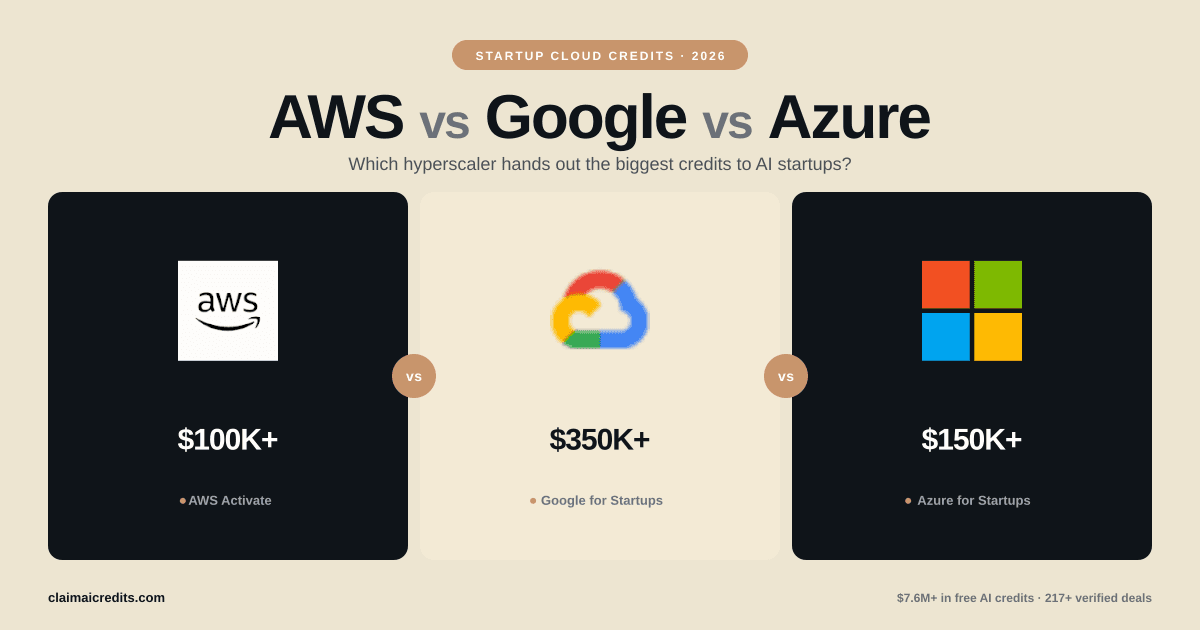
Бесплатные облачные кредиты для AI-стартапов 2026: получите $1M+ от Google, AWS, Microsoft и других
Каждая программа облачных кредитов для AI-стартапов в 2026 году. Получите $350K от Google, $300K от AWS, $150K от Microsoft и стекуйте программы, чтобы превысить $1M в общих кредитах.
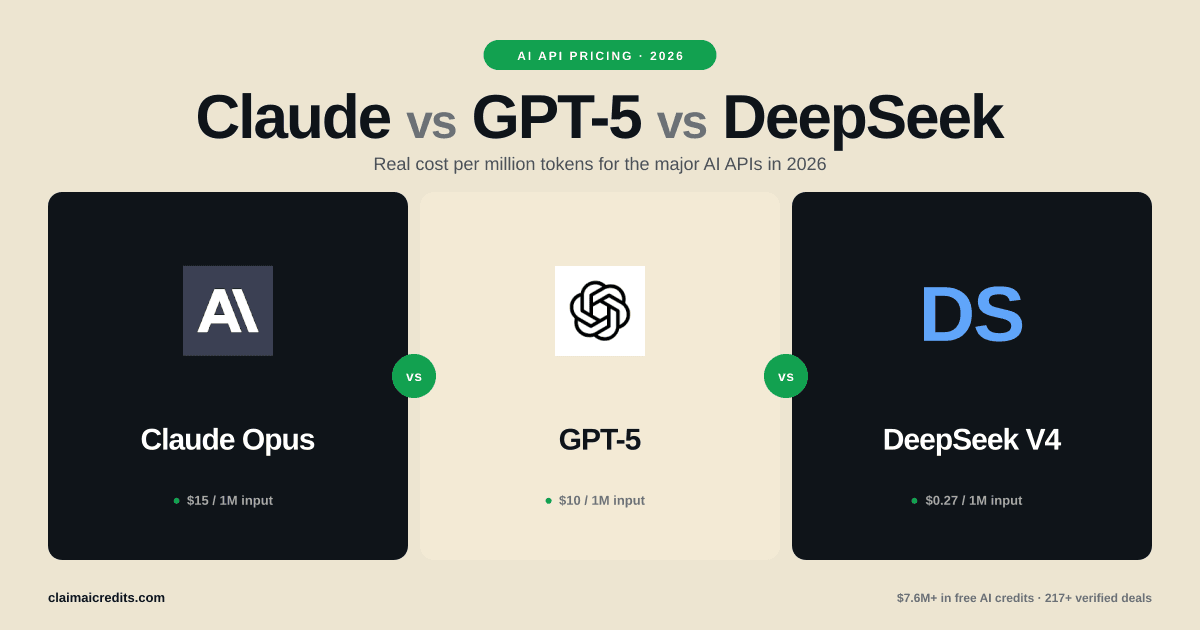
Сравнение цен на AI API в 2026 году: DeepSeek vs Claude vs GPT-5 vs Gemini (реальные затраты)
Полное сравнение цен на AI API в 2026 году. Стоимость за токен для DeepSeek V4, Claude Opus/Sonnet/Haiku, GPT-5/GPT-4.1, Gemini 2.5, Mistral и Groq. Прогнозы ежемесячных затрат и источники бесплатных кредитов.