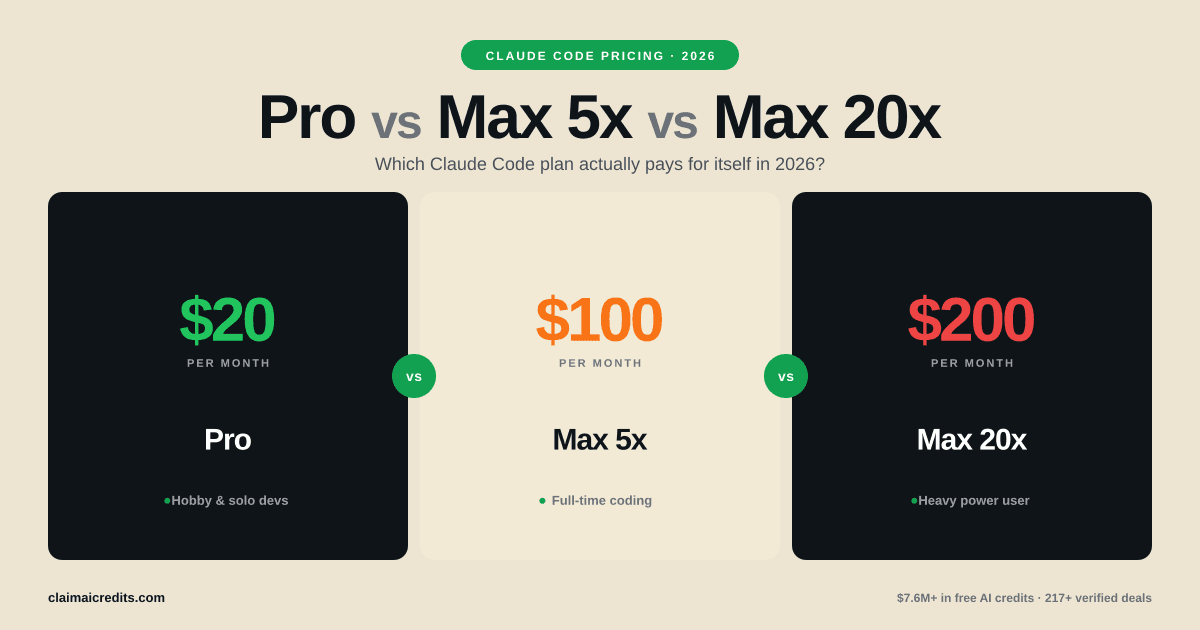
Claude Code Pricing 2026: असली लागत, हर प्लान समझाया गया
Claude Code की हर प्लान पर असली कीमत — Pro, Max, API — असली मासिक scenarios और $25K+ फ्री क्रेडिट के साथ।
2026 में Claude Code की असली लागत
Claude Code उपलब्ध सबसे capable AI coding assistant बन गया है। यह पूरे project की reasoning, multi-file refactors, और complex debugging handle करता है जिसे दूसरे tools match नहीं कर सकते।
लेकिन pricing सबको confuse करती है। Reddit threads ऐसे developers से भरे हैं जिन्होंने flat $20/month की उम्मीद की थी और $400+ bills मिले। एक viral post ने 31 developers की team को track किया जो API usage में $80,000/month के बराबर खर्च कर रही थी।
मुद्दा यह है कि Claude Code की लागत पूरी तरह इस पर depend करती है कि आप इसे कैसे access करते हैं। Claude Pro subscription flat $20/month है। API session पर $0.05 से $50 तक खर्च कर सकता है, यह model और context size पर निर्भर करता है।
यह guide हर pricing option को break down करती है, real monthly cost scenarios दिखाती है, और बताती है कि अपनी लागत offset करने के लिए $25,000+ फ्री क्रेडिट कैसे access करें।
असली लागत range: Claude Code की लागत $20/month (Pro plan, light usage) से $400+/month (Opus 4.6 के साथ heavy API usage) तक होती है। ज़्यादातर developers $20-$100/month के बीच रहते हैं। सबसे बड़ा cost lever है model selection — routine tasks के लिए Opus से Sonnet पर switch करने से लागत 80% कम होती है।
हर Claude Code Pricing Plan की तुलना
2026 में Claude Code access करने के हर तरीके का पूरा breakdown:
| Plan | मासिक लागत | Claude Code Access | Usage Limits | किसके लिए Best |
|---|---|---|---|---|
| Free Tier (API) | $0 (+ $5 credits) | सिर्फ API से | ~3 req/min, $5 total | सिर्फ testing |
| Claude Pro | $20/mo | शामिल | Standard limits | Light-moderate coding |
| Claude Max 5x | $100/mo | शामिल | 5x Pro limits | रोज़ का coding |
| Claude Max 20x | $200/mo | शामिल | 20x Pro limits | Heavy development |
| API (Pay-per-token) | Usage-based | Direct API access | Rate-limit based tier | Teams, automation |
Claude Pro ($20/month) — शुरुआती बिंदु
Claude Pro वह जगह है जहाँ ज़्यादातर individual developers शुरू करते हैं। $20/month में आपको मिलता है:
- Claude Code का full access
- Claude Opus 4.6, Sonnet 4.5, और Haiku 4.5 का access
- Standard usage limits (रोज़ 2-4 घंटे active coding के लिए पर्याप्त)
- Peak hours में priority access
पेच: Pro में usage caps हैं। Heavy coding sessions में आप rate limits hit करेंगे। जब ऐसा होता है, Claude Code तब तक pause हो जाता है जब तक आपका allowance reset नहीं होता। जो developers रोज़ 6+ घंटे code करते हैं, उनके लिए यह real bottleneck बन जाता है।
Claude Max 5x ($100/month) — Daily Coders के लिए
Claude Max 5x आपको Pro की 5 गुना usage limits देता है। इसका मतलब:
- रोज़ 5x ज़्यादा messages और tokens
- सामान्य workdays में rate limits शायद ही hit होंगे
- Same model access (Opus, Sonnet, Haiku)
- Higher priority queue access
किसको चाहिए: जो developers हफ्ते में दो बार से ज़्यादा Pro limits hit करते हैं। अगर आप Claude Code के साथ रोज़ 4-8 घंटे code कर रहे हैं, यह plan rate-limited pauses से productivity loss खत्म करके खुद को pay कर देता है।
Claude Max 20x ($200/month) — Power Users के लिए
Claude Max 20x सबसे top subscription tier है:
- 20x Pro usage limits
- पूरे दिन के coding sessions के लिए design किया गया
- Pair-programming workflows के लिए suitable जहाँ Claude Code continuously चलता है
- सबसे high priority access
किसको चाहिए: Full-time developers जो पूरे workday Claude Code को primary coding partner के रूप में use करते हैं। एक account share करने वाली small teams के लिए भी useful (हालाँकि multi-user scenarios के लिए Anthropic की terms review करनी चाहिए)।
API (Pay-per-Token) — पूरा Control, Variable Cost
API आपको Claude models का direct access देता है बिना usage caps के — आप consume किए गए token के हिसाब से pay करते हैं। यही तरीका है जिससे teams और automated pipelines Claude Code access करते हैं।
 ClaimAICredits
अपना Ideal Claude Plan खोजें
हर Anthropic credit program की तुलना करें और अपने coding workflow के लिए सही plan खोजें। 217+ verified perks उपलब्ध।
Plans की तुलना करें
Model के हिसाब से Claude API Token Pricing
अगर आप Claude Code को API के ज़रिए use करते हैं, आपकी लागत इस पर निर्भर करती है कि कौन सा model use कर रहे हैं और हर session कितने tokens consume करता है।
प्रति million tokens current pricing:
| Model | Input Cost | Output Cost | Cache Write | Cache Read | किसके लिए Best |
|---|---|---|---|---|---|
| Haiku 4.5 | $0.80 | $4.00 | $1.00 | $0.08 | Simple completions, linting |
| Sonnet 4.5 | $3.00 | $15.00 | $3.75 | $0.30 | General coding, debugging |
| Opus 4.6 | $15.00 | $75.00 | $18.75 | $1.50 | Complex reasoning, architecture |
$100 के API credits में क्या मिलता है:
| Model | Input Tokens | Output Tokens | लगभग Coding Sessions |
|---|---|---|---|
| Haiku 4.5 | 125M input | 25M output | 500-800 sessions |
| Sonnet 4.5 | 33M input | 6.7M output | 130-250 sessions |
| Opus 4.6 | 6.7M input | 1.3M output | 25-50 sessions |
फ़र्क चौंकाने वाला है। Haiku पर $100 आपको सैकड़ों coding sessions देता है। Opus पर $100 आपको करीब एक हफ्ते की heavy development देता है।
असली Monthly Cost Scenarios
असली developer patterns के आधार पर अलग-अलग usage levels पर Claude Code की असली लागत:
Scenario 1: Light Usage (Hobby/Part-time)
| Metric | Details |
|---|---|
| Usage | 1-2 घंटे/दिन, 3-4 दिन/हफ्ता |
| Sessions | ~50 Claude Code sessions/महीना |
| Best plan | Claude Pro ($20/mo) |
| API equivalent | $15-30/mo (Sonnet), $60-150/mo (Opus) |
| सलाह | Pro plan। आप शायद ही limits hit करेंगे। |
Scenario 2: Moderate Usage (Full-time Developer)
| Metric | Details |
|---|---|
| Usage | 4-6 घंटे/दिन, 5 दिन/हफ्ता |
| Sessions | ~200 Claude Code sessions/महीना |
| Best plan | Claude Max 5x ($100/mo) या API |
| API equivalent | $60-120/mo (Sonnet), $250-500/mo (Opus) |
| सलाह | अगर predictable लागत चाहिए तो Max 5x। Flexibility चाहिए तो Sonnet के साथ API। |
Scenario 3: Heavy Usage (Lead Dev / Pair Programming)
| Metric | Details |
|---|---|
| Usage | 6-10 घंटे/दिन, 5-6 दिन/हफ्ता |
| Sessions | ~500+ Claude Code sessions/महीना |
| Best plan | Claude Max 20x ($200/mo) या API |
| API equivalent | $150-400/mo (Sonnet), $600-2,000/mo (Opus) |
| सलाह | Fixed cost के लिए Max 20x। Automation चाहिए तभी API। |
Scenario 4: Team Usage (5-10 Developers)
| Metric | Details |
|---|---|
| Usage | 5-10 devs, हर एक 4+ घंटे/दिन coding |
| Sessions | कुल 1,000-5,000 sessions/महीना |
| Best plan | Model routing के साथ API |
| API equivalent | $500-3,000/mo (mixed models) |
| सलाह | Sonnet default + Opus escalation के साथ API। Prompt caching लागू करें। |
Watch करने योग्य Hidden Costs
Claude Code pricing में कई cost traps हैं जो developers को surprise कर देते हैं:
1. Context Window Consumption
Claude Code हर request के साथ आपका पूरा project context भेजता है। एक typical session में शामिल है:
- Current file (500-2,000 tokens)
- Context के लिए related files (2,000-10,000 tokens)
- आपकी instructions और conversation history (500-2,000 tokens)
- System prompts और tool definitions (1,000-3,000 tokens)
एक single Claude Code request 5,000-15,000 input tokens consume कर सकता है इससे पहले कि model code की एक भी line generate करे। Opus 4.6 पर $15/million input tokens पर, यह अकेले input costs में $0.075-$0.225 प्रति request है।
2. Output Token Costs
सभी models में Output tokens, input tokens से 5x ज़्यादा महंगे हैं। जब Claude Code पूरा file refactor generate करता है (2,000-5,000 output tokens), output cost dominate करती है:
| Model | 3,000 output tokens की लागत |
|---|---|
| Haiku 4.5 | $0.012 |
| Sonnet 4.5 | $0.045 |
| Opus 4.6 | $0.225 |
3. Failed Requests भी पैसे लेते हैं
अगर Claude Code गलत code generate करता है और आप regenerate करते हैं, तो आप दोनों attempts के लिए pay करते हैं। 5-10 regenerations वाला back-and-forth debugging session एक successful request से 5-10x ज़्यादा लागत ले सकता है।
4. Model का Opus पर default होना
कुछ interfaces Opus 4.6 पर default होते हैं। अगर आप explicitly Sonnet या Haiku select नहीं करते, हर request आवश्यकता से 5x ज़्यादा खर्च करती है। हमेशा अपना model selection check करें।
Cost trap: Claude Code के context windows regular chat से बहुत बड़े हैं। एक complex coding session 50,000-100,000 tokens consume कर सकता है। Opus पर यह $4-$8 प्रति session है। Sonnet पर $0.90-$1.80। Model choice सबसे बड़ा cost lever है।
Claude Code की लागत 60-80% कैसे घटाएँ
Strategy 1: Model Routing
अलग tasks के लिए अलग models use करें:
| Task | Recommended Model | Opus से Cost Savings |
|---|---|---|
| Autocomplete / simple edits | Haiku 4.5 | 95% सस्ता |
| Code generation / debugging | Sonnet 4.5 | 80% सस्ता |
| Architecture / complex refactors | Opus 4.6 | Baseline |
| Code review / explanations | Sonnet 4.5 | 80% सस्ता |
| Test generation | Sonnet 4.5 | 80% सस्ता |
| Documentation | Haiku 4.5 | 95% सस्ता |
80/15/5 rule: 80% tasks के लिए Sonnet, 15% के लिए Opus, और 5% के लिए Haiku use करें। यह अकेले हर चीज़ के लिए Opus use करने की तुलना में लागत 70-80% घटा देता है।
Strategy 2: Prompt Caching
Prompt caching repeated context store करता है ताकि आप full price सिर्फ एक बार pay करें। पहली request के बाद, cached tokens 90% कम लागत में आते हैं।
Claude Code के लिए, जहाँ same codebase context हर request के साथ भेजा जाता है:
| बिना Caching | Caching के साथ | Savings |
|---|---|---|
| 10,000 input tokens x $15/M = $0.15 प्रति request | 10,000 cached tokens x $1.50/M = $0.015 प्रति request | 90% |
| 200 requests/महीना = $30 input cost | 200 requests/महीना = $3 input cost | $27/महीना बचत |
Strategy 3: Context Management
हर request के साथ भेजी जाने वाली files और context कम करें:
node_modules, build artifacts, और test fixtures exclude करने के लिए.claudeignoreया equivalent use करें- Whole-project passes की जगह large refactors को file-by-file changes में तोड़ें
- Unrelated tasks के बीच conversation history clear करें
- पूरे directory trees की जगह targeted file references use करें
Strategy 4: Similar Requests को Batch करें
एक-एक करके changes माँगने की जगह related code changes को एक single, well-structured prompt में group करें। 5 changes वाली एक detailed request 5 separate requests से कम लागत में आती है क्योंकि आप context के लिए सिर्फ एक बार pay करते हैं।
ClaimAICredits$25K+ फ्री Claude Credits पाएँ
Anthropic, AWS, और Google Cloud से credits stack करके महीनों का Claude Code usage cover करें। Step-by-step guides शामिल।
Free Credits Browse करेंClaude Pro vs Max: Claude Code के लिए कौन सा Plan?
यह सबसे common सवाल है जो developers का सामना होता है। यह रहा decision framework:
| Factor | Claude Pro ($20) | Max 5x ($100) | Max 20x ($200) |
|---|---|---|---|
| रोज़ का coding time | 1-3 घंटे | 4-6 घंटे | 6+ घंटे |
| Rate limit hits | कभी-कभी | शायद ही | लगभग कभी नहीं |
| प्रति घंटा coding लागत | ~$0.30/hr | ~$0.50/hr | ~$0.30/hr |
| Model access | सभी models | सभी models | सभी models |
| Priority access | Standard | Higher | Highest |
| किसके लिए Best | Side projects, learning | Professional daily use | Full-time pair programming |
Break-even analysis:
- Pro to Max 5x: Upgrade करने लायक अगर आप महीने में 8-10 बार से ज़्यादा rate limits hit करते हैं। हर rate-limited pause आपको ~15-30 मिनट productive time costs करता है
- Max 5x to Max 20x: Upgrade करने लायक अगर आप रोज़ 6 घंटे से ज़्यादा code करते हैं और फिर भी Max 5x limits hit करते हैं। $200/महीना पर, इसे pay off होने के लिए आपको अपने coding time को $25+/घंटे value देना होगा (ज़्यादातर professional developers करते हैं)
Code के लिए Claude Pro vs API:
| Scenario | Pro ($20/mo) | API (Sonnet) | Winner |
|---|---|---|---|
| Light usage (50 sessions) | $20 flat | $15-30 | API (थोड़ा सस्ता) |
| Moderate usage (200 sessions) | $20 flat | $60-120 | Pro (काफी सस्ता) |
| Heavy usage (500+ sessions) | $20 flat (पर rate limited) | $150-400 | limit tolerance पर निर्भर |
| Team usage (5 devs) | $100 (5x Pro) | $300-1,500 | volume पर निर्भर |
Bottom line: Individual developers के लिए, Claude Pro या Max API pricing से कहीं बेहतर value देता है। API उन teams के लिए समझ आता है जिन्हें automation, custom integrations, या कोई rate limits नहीं चाहिए।
Claude Code के लिए $25,000+ फ्री Credits कैसे पाएँ
Claude Code लागत offset करने का सबसे तेज़ तरीका है free credit programs को stack करना। ये credits Claude Code सहित सभी Claude API usage के लिए काम करते हैं:
| Program | Credits | Eligibility | Application Time |
|---|---|---|---|
| Anthropic Free Tier | $5 | कोई भी | तुरंत |
| Anthropic Startup Program | $1,000 – $25,000 | Early-stage स्टार्टअप | 2-4 हफ्ते |
| AWS Activate (Bedrock) | $1,000 – $100,000 | किसी भी stage के स्टार्टअप | 1-2 हफ्ते |
| Google Cloud Startups (Vertex AI) | $2,000 – $100,000 | किसी भी stage के स्टार्टअप | 2-3 हफ्ते |
| Microsoft for Startups (Azure) | $1,000 – $5,000 | किसी भी stage के स्टार्टअप | 1 हफ्ता |
कुल stackable credits: $5,005 से $230,005
ये programs अलग billing systems use करते हैं। Anthropic direct credits, AWS Bedrock credits, और GCP Vertex AI credits सब independent हैं — आप उन सबको simultaneously use कर सकते हैं।
Claude Code के लिए credits कितने समय चलते हैं?
| Credit Amount | Haiku 4.5 | Sonnet 4.5 | Opus 4.6 |
|---|---|---|---|
| $5 | 2-3 हफ्ते light use | 3-5 दिन light use | 1-2 दिन |
| $1,000 | 8-12 महीने | 2-4 महीने | 2-4 हफ्ते |
| $10,000 | 2+ साल | 10-18 महीने | 3-6 महीने |
| $25,000 | 3+ साल | 2+ साल | 8-14 महीने |
$25,000 stacked credits और smart model routing (80% Sonnet, 15% Opus, 5% Haiku) के साथ, ज़्यादातर developers credits खत्म होने से पहले 12-24 महीने code कर सकते हैं।
Anthropic credits | AWS Activate credits
Claude Code vs Competitors: Pricing Comparison
Claude Code pricing alternatives के मुकाबले कैसी है?
| Tool | मासिक लागत | Best Model | Multi-file Refactors | Full Project Context |
|---|---|---|---|---|
| Claude Code (Pro) | $20 | Opus 4.6 | हाँ | हाँ |
| Claude Code (Max 5x) | $100 | Opus 4.6 | हाँ | हाँ |
| GitHub Copilot Individual | $10 | GPT-4o | Limited | नहीं |
| GitHub Copilot Business | $19 | GPT-4o | Limited | नहीं |
| Cursor Pro | $20 | Multiple | हाँ | हाँ |
| Cursor Business | $40 | Multiple | हाँ | हाँ |
| ChatGPT Plus (coding) | $20 | GPT-4o | नहीं | नहीं |
Claude Code का फायदा complex, multi-step coding tasks में है। यह पूरे project की reasoning handle करता है, cross-file dependencies समझता है, और multi-file refactors plan और execute कर सकता है। शुद्ध line-by-line autocomplete के लिए, GitHub Copilot $10/महीना पर price पर हराना मुश्किल है।
Value का सवाल इस पर आता है: क्या आप simple completions कर रहे हैं या complex coding काम? अगर आपके tasks में पूरे codebases समझना, multi-file issues debug करना, या architecture changes plan करना शामिल है, Claude Code की higher price proportionally ज़्यादा value देती है।
Claude Code के लिए Monthly Budget Planning
अपनी role के आधार पर Claude Code budget plan करने के लिए यह table use करें:
| Role | Recommended Plan | मासिक Budget | वार्षिक लागत |
|---|---|---|---|
| स्टूडेंट / Hobbyist | Pro | $20 | $240 |
| Freelancer | Pro या Max 5x | $20-100 | $240-1,200 |
| Full-time Developer | Max 5x | $100 | $1,200 |
| Lead / Senior Dev | Max 20x या API | $200-400 | $2,400-4,800 |
| Small Team (5 devs) | API + routing | $300-1,500 | $3,600-18,000 |
| Engineering Org (20+ devs) | API + caching + routing | $1,000-5,000 | $12,000-60,000 |
वार्षिक लागत घटाएँ:
- Free credits से शुरू करें — 3-4 programs में apply करें और कुछ भी pay करने से पहले $5K-25K stack करें
- Sonnet को default करें — ज़्यादातर tasks के लिए Opus की तुलना में 80% बचाता है
- Prompt caching enable करें — repeated context पर 70-90% बचाता है
- Monthly usage audit करें — model usage breakdown के लिए अपना Anthropic dashboard check करें और optimize करें
शुरुआत करना: Optimal Setup
Claude Code के साथ शुरू करने वाले developers के लिए recommended path:
- दिन 1: Anthropic API के लिए sign up करें और $5 free tier credits claim करें। तीनों models के साथ Claude Code test करें
- हफ्ता 1: अगर आप regularly code करने का plan करते हैं, Claude Pro ($20/mo) subscribe करें। यह individual developers के लिए best value है
- हफ्ता 1-2: अगर आप product बना रहे हैं तो Anthropic Startup Program में apply करें। Bedrock credits के लिए AWS Activate में apply करें
- महीना 1: अपने usage का मूल्यांकन करें। अगर आप हफ्ते में दो बार से ज़्यादा Pro limits hit करते हैं, Max 5x में upgrade करें
- महीना 2-3: अगर आपके स्टार्टअप credits आ जाते हैं, API-heavy workloads को उन credits use करने के लिए switch करें। रोज़ के interactive coding के लिए Pro/Max रखें
Interactive काम के लिए Pro/Max subscription plus batch processing और automation के लिए API credits का combination आपको best cost-to-value ratio देता है।
सभी उपलब्ध credit programs पर deeper look के लिए, हमारी complete guide to free Anthropic credits देखें।
Frequently Asked Questions
Claude Code Claude Pro ($20/mo), Claude Max 5x ($100/mo), और Claude Max 20x ($200/mo) के साथ शामिल है। आप इसे API के ज़रिए pay-per-token pricing पर भी use कर सकते हैं। असली मासिक लागत हल्के use के लिए $20 से लेकर API-आधारित heavy development के लिए $400+ तक होती है।
Claude Code का कोई standalone free tier नहीं है, लेकिन आप Anthropic API के free tier ($5 क्रेडिट) के ज़रिए Claude models access कर सकते हैं। Free tier में सख्त rate limits हैं और यह सिर्फ initial testing के लिए ठीक है, लगातार coding काम के लिए नहीं।
Claude Pro ($20/mo) में Claude Code standard usage limits के साथ शामिल है। Claude Max 5x ($100/mo) 5 गुना ज़्यादा usage देता है, और Max 20x ($200/mo) 20 गुना। Max plans उन developers के लिए हैं जो heavy coding sessions में Pro rate limits बार-बार hit करते हैं।
High bills आमतौर पर Opus 4.6 के API usage से आते हैं, जिसकी कीमत $15/$75 प्रति million tokens है। एक heavy coding session 50,000+ tokens consume कर सकता है। ज़्यादातर tasks के लिए Sonnet 4.5 use करें, prompt caching इस्तेमाल करें, और model routing लागू करके लागत 60-80% तक घटाएँ।
80% coding tasks के लिए Sonnet 4.5 ($3/$15 प्रति million tokens) use करें — यह code generation, debugging, और refactoring अच्छे से handle करता है। Complex architecture decisions और multi-file refactors के लिए Opus 4.6 ($15/$75) रखें। Simple completions और linting के लिए Haiku 4.5 ($0.80/$4) use करें।
GitHub Copilot की कीमत $10/mo (Individual) या $19/mo (Business) है। Claude Pro with Claude Code की कीमत $20/mo है। हालाँकि, Claude Code पूरे project की reasoning और multi-file refactors handle करता है जो Copilot नहीं कर सकता। शुद्ध autocomplete के लिए Copilot सस्ता है। Complex coding tasks के लिए Claude Code ज़्यादा value देता है।
हाँ। आप programs को stack करके $25,000 से ज़्यादा फ्री क्रेडिट access कर सकते हैं: Anthropic free tier ($5), Anthropic Startup Program ($1K-$25K), AWS Activate via Bedrock ($1K-$100K), और Google Cloud for Startups via Vertex AI ($2K-$100K)। ये credits Claude Code सहित सभी Claude API usage के लिए काम करते हैं।
हाँ। Claude Code हर request के साथ आपका पूरा codebase context भेजता है, जो token consumption को काफी बढ़ा देता है। एक typical Claude Code session standard chat conversation से 3-10x ज़्यादा tokens use करता है। इसी वजह से API पर developers को अक्सर unexpectedly high bills मिलते हैं।
Prompt caching आपको repeated context (जैसे आपका codebase) cache करने देता है ताकि आप इसके लिए सिर्फ एक बार pay करें। Cached input tokens regular input tokens से 90% सस्ते होते हैं। Claude Code के लिए, जहाँ same files बार-बार भेजी जाती हैं, caching input costs को 70-90% तक घटा सकता है।
अगर आप दिन में 4 घंटे से कम code करते हैं, Claude Pro $20/mo पर best value है। अगर आपको unlimited usage चाहिए या आप automated coding pipelines बना रहे हैं, API आपको ज़्यादा control देता है लेकिन लागत usage के साथ बढ़ती है। Heavy developers अक्सर अकेले API usage पर $100-400/mo खर्च करते हैं।
 ClaimAICredits
AI टूल्स पर अपना स्टार्टअप बजट बचाएं
ClaimAICredits AI टूल्स, क्लाउड सेवाओं और APIs पर एक्सक्लूसिव क्रेडिट्स, छूट और डील्स क्यूरेट करता है और एक्सेस प्रदान करता है, ताकि स्टार्टअप्स पैसे बचा सकें।
- $7.6M+ मूल्य के 217+ वेरिफाइड क्रेडिट्स
- स्टेप-बाय-स्टेप एप्लीकेशन गाइड्स
- 24 घंटे में रिस्पॉन्स के साथ प्रायोरिटी सपोर्ट
संबंधित लेख
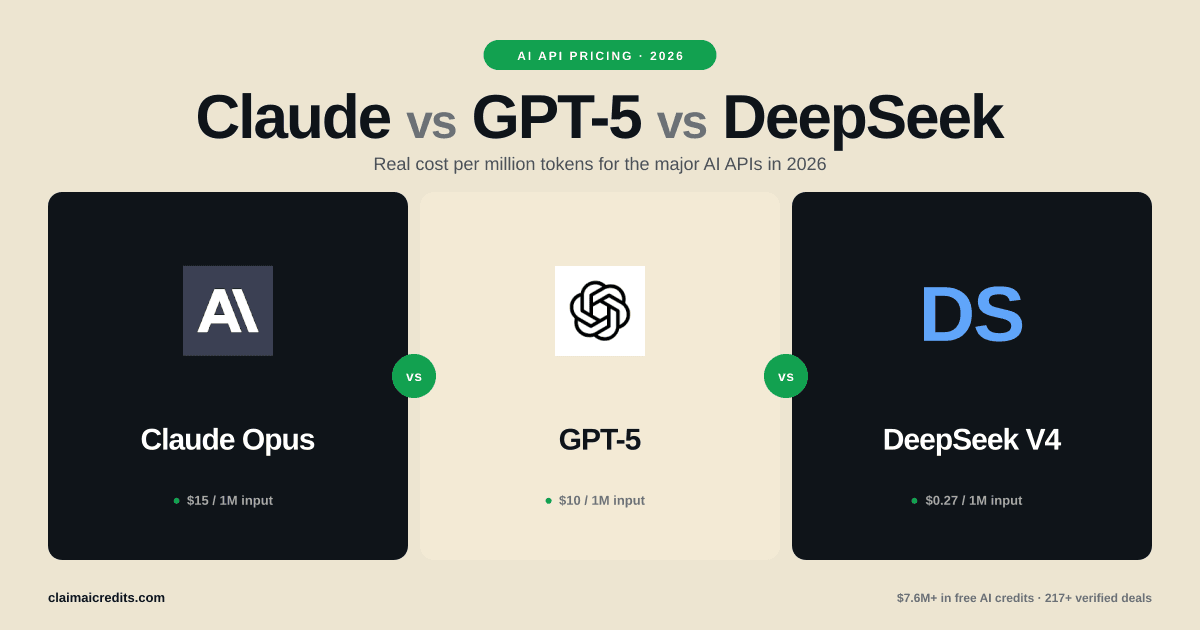
AI API प्राइसिंग तुलना 2026: DeepSeek vs Claude vs GPT-5 vs Gemini (असली लागत)
2026 के लिए पूरी AI API प्राइसिंग तुलना। DeepSeek V4, Claude Opus/Sonnet/Haiku, GPT-5/GPT-4.1, Gemini 2.5, Mistral, और Groq की प्रति-टोकन लागत। मासिक खर्च का अनुमान और मुफ्त क्रेडिट के स्रोत।
Anthropic vs OpenAI 2026: आपके स्टार्टअप को किस AI कंपनी पर बनाना चाहिए?
2026 में स्टार्टअप्स के लिए Anthropic और OpenAI की गहन तुलना। मॉडल्स, प्राइसिंग, क्रेडिट प्रोग्राम, API फीचर्स, एंटरप्राइज़ टूल्स, और दोनों पर बनाने की स्मार्ट रणनीति।
The Ultimate CLAUDE.md File Guide: अपनी Claude Code Productivity को 10x कैसे करें
Claude Code के लिए CLAUDE.md configuration file में महारत हासिल करें। Templates, best practices, hooks, slash commands, और viral हुआ 27-agent setup।